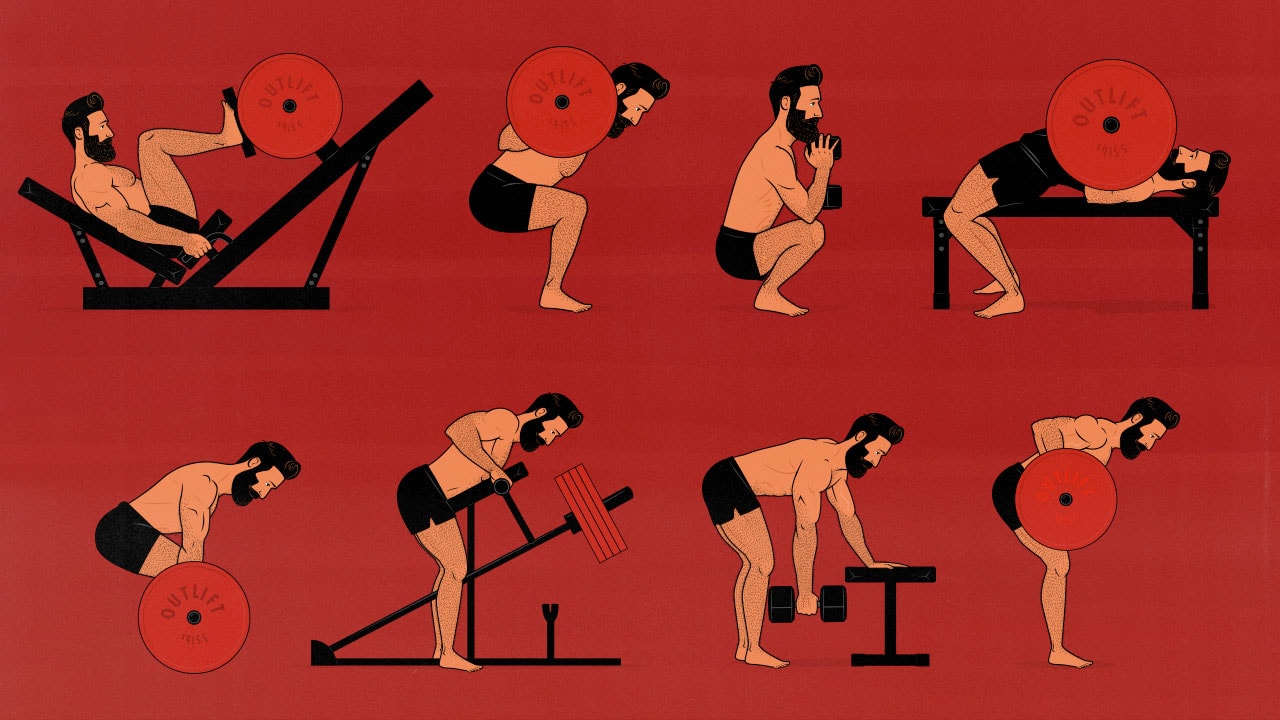
Hypertrophy Training Program for Maximum Muscle Growth
Hypertrophy Training Program for Maximum Muscle Growth is defined by structured mechanical tension, sufficient training volume, recovery management, and nutritional alignment that sustain elevated muscle protein synthesis over time. Muscle enlargement is not random adaptation but a predictable biological response to repeated loading patterns, cellular signaling activation, and progressive resistance exposure.
Mechanical Tension as the Central Hypertrophy Stimulus
Mechanical tension represents the primary variable responsible for initiating hypertrophic signaling. When muscle fibers generate force against resistance, mechanosensitive pathways activate intracellular processes that regulate growth. Scientific discussion in the Journal of Physiology identifies tension driven activation of mTOR as a governing mechanism in skeletal muscle adaptation.
Training must apply loads that require high motor unit recruitment, particularly type two fibers with the greatest growth potential. Light resistance performed for endurance does not deliver sufficient mechanical stress to drive significant hypertrophy.
Controlled eccentric phases amplify tension by increasing time under load. This mechanical strain produces microdamage that signals satellite cell activation and structural remodeling.
Training Volume Determines Total Growth Signal
Volume represents the cumulative workload applied to a muscle group and functions as a dosage variable. Multiple sets create repeated anabolic signaling events, extending the duration of muscle protein synthesis.
Meta analyses discussed in Sports Medicine show that moderate to high weekly set volumes correlate strongly with hypertrophic outcomes when recovery capacity is maintained.
Insufficient volume limits adaptation. Excessive volume elevates fatigue without proportional growth. Productive hypertrophy training operates within recoverable thresholds that allow repeated exposure.
Distribution of volume across the week maintains frequent stimulation while preventing excessive localized damage.
Hypertrophy Training Program for Maximum Muscle Growth

A structured hypertrophy system integrates frequency, intensity, and progression rather than relying on isolated sessions. Position stands from the American College of Sports Medicine emphasize planned resistance progression as essential for sustained muscular development.
Each session reinforces prior adaptations, gradually increasing force production capacity and tissue density. Randomized training fails because biological systems respond to consistency, not novelty.
Progressive Overload Sustains Adaptation
Muscle tissue resists change unless mechanical demand increases over time. Progressive overload requires systematic increases in resistance, repetitions, or density of work performed.
Research published in the Journal of Applied Physiology confirms that incremental loading leads to measurable increases in muscle cross sectional area when sustained across training cycles.
Without progression, neuromuscular efficiency improves but hypertrophy plateaus. The body refines coordination instead of expanding tissue.
Tracking load progression provides the necessary stimulus escalation for continued growth.
Frequency Maintains Elevated Protein Synthesis
Muscle protein synthesis rises after resistance exercise but gradually returns to baseline. Training frequency determines how often this anabolic window is reopened.
Investigations in the European Journal of Sport Science demonstrate that stimulating muscle groups multiple times weekly enhances hypertrophy compared with once weekly exposure.
Frequent training does not imply maximal intensity each session. Variation in load and repetition range allows repeated stimulation without excessive fatigue.
The objective is sustained signaling, not isolated exhaustion.
Nutritional Support Enables Tissue Construction
Muscle hypertrophy requires adequate amino acids and energy availability. Protein intake supplies substrates for actin and myosin synthesis, while carbohydrates replenish glycogen necessary for repeated high intensity contractions.
Guidelines from the International Society of Sports Nutrition outline the importance of sufficient protein distribution to maintain positive nitrogen balance during resistance training phases.
Caloric insufficiency suppresses anabolic hormones and limits repair capacity. Nutritional adequacy ensures that training signals result in structural adaptation rather than degradation.
Recovery Processes Drive Structural Remodeling
Training initiates damage. Recovery completes adaptation. During rest, satellite cells proliferate and fuse to muscle fibers, expanding their size and contractile strength.
Sleep research summarized by the National Institutes of Health shows deep sleep stages regulate growth hormone secretion essential for tissue repair.
Chronic recovery deficits elevate cortisol and suppress testosterone, impairing hypertrophy despite continued exercise.
Muscle development therefore reflects recovery quality as much as training intensity.
Exercise Selection Influences Fiber Recruitment
Compound movements recruit multiple joints and large muscle masses, creating greater systemic anabolic signaling. Squats, presses, rows, and deadlifts impose coordinated force production that maximizes motor unit activation.
Biomechanical research available through the British Journal of Sports Medicine emphasizes multi joint exercises as foundational to strength and hypertrophy development.
Isolation exercises refine muscular symmetry and increase localized volume but function as supplements rather than primary drivers.
Program design balances both categories to optimize overall stimulation.
Metabolic Stress Enhances Cellular Signaling
While mechanical tension remains primary, metabolic stress contributes secondary signaling that supports hypertrophy. Accumulation of metabolites such as lactate increases hormonal responses and cellular swelling.
Scientific perspectives in Frontiers in Physiology describe metabolic stress as a complementary pathway reinforcing muscle growth when combined with sufficient load.
Higher repetition ranges generate this stress, providing variation that enhances adaptation without replacing heavy resistance work.
Hormonal Environment Modulates Growth Efficiency

Anabolic hormones regulate the rate of protein synthesis and tissue repair. Resistance training increases sensitivity to testosterone and insulin like growth factor, improving nutrient partitioning.
Endocrine explanations found in Endotext show that mechanical loading alters receptor activity, making muscle more responsive to circulating hormones.
Chronic psychological stress or undernutrition elevates catabolic signaling that counteracts hypertrophy.
Physiological environment determines whether training signals result in growth.
Periodization Prevents Adaptive Resistance
The body adapts to constant stimuli. Periodization introduces planned variation in intensity and volume to maintain responsiveness while managing fatigue.
Training theory literature in Strength and Conditioning Journal describes periodized resistance training as superior to static programming for long term hypertrophy.
Alternating phases of heavier loading and moderate volume prevents stagnation and supports continued progression.
Neuromuscular Coordination Enables Greater Loading
Early strength improvements arise from improved neural efficiency rather than muscle enlargement. Enhanced synchronization allows heavier loads that later stimulate hypertrophy.
Motor learning research presented in Frontiers in Human Neuroscience explains how neural adaptation precedes structural change.
Skill acquisition in lifting technique therefore directly influences muscle growth capacity.
Micronutrients Support Energy Production and Repair
Vitamins and minerals act as cofactors in ATP generation, oxygen transport, and protein metabolism. Deficiencies reduce training output and recovery efficiency.
Global dietary analyses from the World Health Organization emphasize nutrient dense food intake to sustain physiological demands of physical training.
Magnesium supports muscle contraction and relaxation cycles. Iron enables oxygen delivery required for high intensity effort.
Consistency Creates Cumulative Hypertrophy
Muscle growth results from repeated cycles of synthesis exceeding breakdown. Each training session contributes incremental adaptation that accumulates over time.
Longitudinal observations from the Framingham Heart Study show sustained physical activity reshapes body composition across decades.
Interruptions reduce signaling frequency and slow cumulative gains.
Hypertrophy reflects persistent biological negotiation between stimulus and recovery.
Cardiovascular Training Must Be Integrated Carefully

Moderate cardiovascular work supports circulation and recovery, but excessive endurance volume activates pathways that compete with hypertrophy signaling.
Concurrent training studies discussed in Sports Medicine show excessive endurance emphasis can attenuate muscle growth through AMPK activation.
Balanced integration maintains conditioning without compromising anabolic pathways.
Structural Adaptation Defines Long Term Muscle Development
Skeletal muscle enlarges only when environmental demands consistently require greater force production. Mechanical load, nutrient supply, hormonal signaling, and recovery cycles interact to produce this adaptation.
Remove progressive demand and the biological incentive for maintaining larger muscle mass disappears. Maintain demand and tissue remodeling continues.
Hypertrophy therefore represents a predictable physiological response governed by repeatable inputs rather than variable training trends.
About the Author